
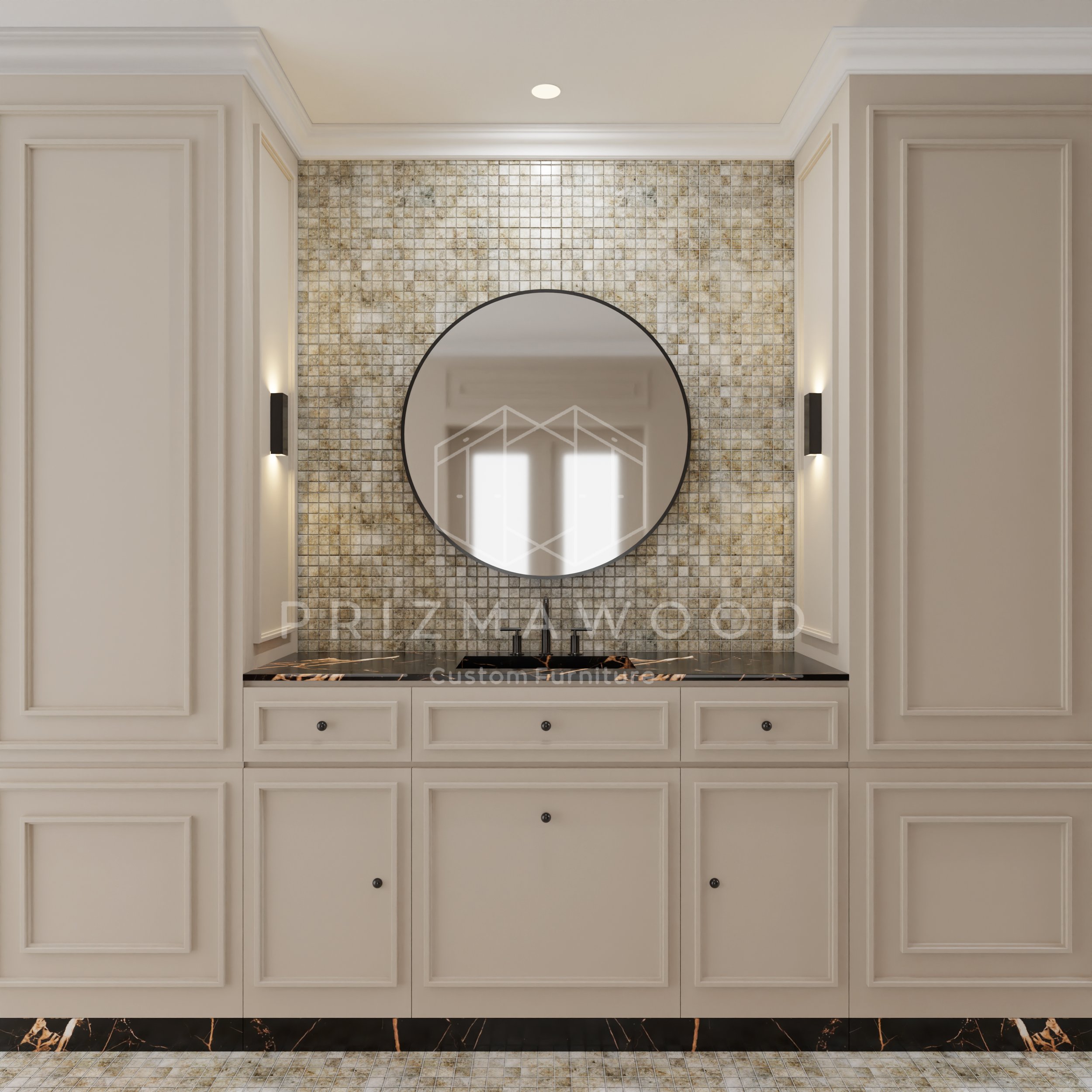
Start with the room, not the cabinet box.
A vanity can anchor a bathroom when moisture-resistant materials, drawers and lighting are coordinated. The most successful projects begin by mapping how the room is used, where clutter gathers and what should be hidden, displayed or reached quickly.
Before thinking about color or door style, look at the daily friction in the space. Are small appliances taking over the counter? Are shoes or coats landing near the entry? Is the garage carrying storage that belongs in a cabinet wall? These patterns reveal what the built-in actually needs to solve.
Plan storage zones before choosing finishes.
Cabinet interiors, drawer depths, door swings and appliance clearances decide whether the finished piece works well. Finishes matter, but they should support a layout that already solves the practical problem.
A premium cabinet plan usually separates frequently used items from seasonal storage, display pieces from closed storage and heavy items from delicate finishes. That hierarchy keeps the design beautiful without making it fragile.
Material direction
Painted cabinetry creates a quiet architectural look, while wood and veneer add warmth. Laminate can be smart for garages, laundry rooms and commercial spaces where durability matters most.
Hardware should be selected with the same care. Soft-close drawer systems, stable hinges, full-extension slides and comfortable pulls make a project feel better every day, long after the initial reveal.
Connect the project to nearby decisions.
Custom cabinetry often affects lighting, outlets, flooring transitions and surrounding trim. Planning those relationships early keeps the final result cleaner.
What to prepare before requesting a quote.
Good starting information includes rough dimensions, a few photos of the room, examples of styles you like, the city where the project is located and a clear note about what is not working today. With that, Prizmawood can guide the conversation toward layout, materials and a realistic project path.
